Ticks, Alpha-Gal, and Protecting Your Skin This Season — Naturally

Warmer months mean more evenings on the porch, more hikes, more time in the garden — and a lot more time in tick territory. This year the conversation around tick bites carries new weight, because a once-obscure condition called alpha-gal syndrome is getting a lot of attention. If you spend time outdoors (or have kids and pets who do), it's worth understanding what's happening and how to protect your skin the clean way.
What is alpha-gal syndrome?
Alpha-gal syndrome (AGS) is an allergy that can develop after a tick bite. Alpha-gal is a sugar molecule found in most mammals — and in red meat like beef, pork, and lamb — but not in people. After certain tick bites, some people's immune systems start reacting to it. The result can be a delayed allergic reaction — often hours after eating red meat or mammal-derived products — ranging from hives and stomach upset to, in serious cases, anaphylaxis.
What makes AGS tricky is the delay: because symptoms can show up three to six hours after a meal, people often don't connect the dots for months.
Why everyone's talking about it now
The numbers are striking. According to the CDC, more than 110,000 suspected cases were identified between 2010 and 2022 — and because AGS isn't a nationally notifiable condition, the true figure is likely far higher, with as many as 450,000 Americans possibly affected. In the U.S., the lone star tick is most often linked to AGS, and its range has been expanding well beyond the southern states, bringing the condition into regions that had rarely seen it before. Earlier, longer tick seasons only add to the exposure.
The takeaway isn't to panic — it's to be tick-smart. Most bites don't lead to AGS, and protecting your skin from bites in the first place is the best place to start.
Protecting your skin from bites and ticks
Bug protection works best in layers. No single step is a force field, but together they dramatically lower your risk:
- Cover up. Long sleeves and pants in tall grass or wooded areas; tuck pants into socks. Light-colored clothing makes ticks easier to spot.
- Protect exposed skin. Apply a repellent to the skin that's left uncovered — arms, ankles, neck.
- Stay on the path. Walk in the center of trails and avoid brushing through tall grass and leaf litter where ticks wait.
- Do a tick check — every time. This is the non-negotiable one. After coming inside, check warm, hidden spots: behind the knees, the waistband, underarms, the scalp and hairline, and behind the ears — and check kids and pets, too. Showering within a couple of hours helps wash off unattached ticks. If you find one attached, remove it promptly.
Where a clean, natural repellent fits
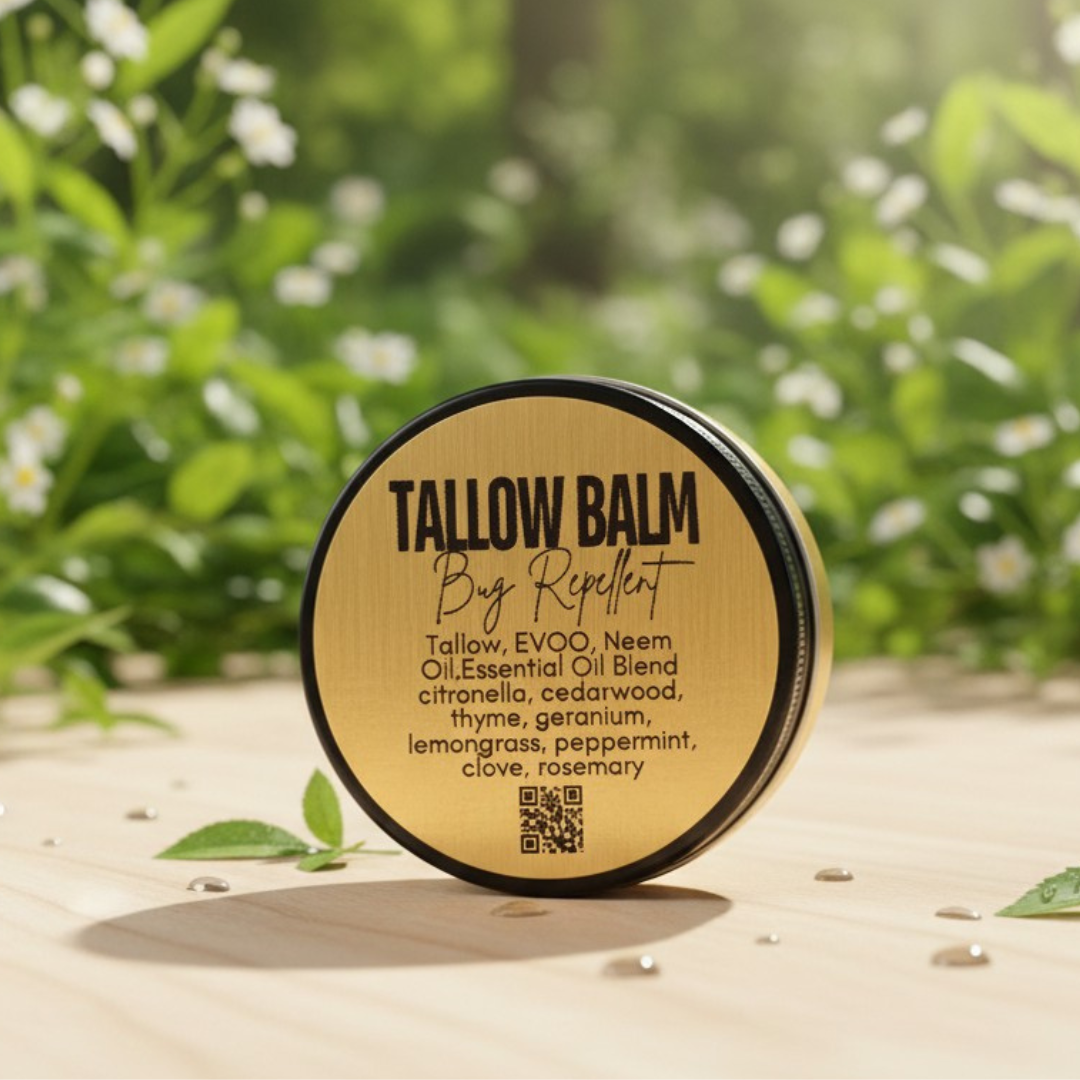
If you've been reaching for the same harsh aerosol every summer, you're not alone in wanting something gentler. That's exactly why we made our Tallow Bug Repellent Balm — a grass-fed tallow base carrying neem oil and a blend of plant essential oils that insects tend to avoid (citronella, cedarwood, lemongrass, peppermint, thyme, geranium, clove, and rosemary). No DEET, no synthetic fragrance, no aerosol to breathe in. The balm format stays on your skin and moisturizes while it works, which makes it an easy daily habit for cookouts, gardening, and porch evenings.
Here's our honest take: a natural balm is a wonderful everyday choice for general bug protection and skin you'll actually want to reapply.
But for high tick-risk situations — think deep woods, heavy infestation, or known lone star tick areas — no repellent of any kind replaces the proven basics: covering up, and most of all, thorough tick checks every single time you come inside. Think of it as one smart layer in a bigger routine, not a guarantee.

A simple after-outdoors routine
Make it a habit and it takes two minutes: apply your balm before you head out, reapply after swimming or heavy sweating, and when you come back in, change clothes, shower if you can, and do a head-to-toe tick check on everyone (pets included). Toss outdoor clothes in a hot dryer for ten minutes to kill any hitchhikers.
Enjoy the season — just check for ticks
Tick season is getting longer and the map is getting bigger, but you don't have to choose between loving the outdoors and protecting your family. Cover up, use a repellent you feel good about, and never skip the tick check. Small habits, big protection.
This article is for general education and isn't medical advice. If you suspect alpha-gal syndrome or have a reaction after a tick bite, see a healthcare provider or allergist. For tick-borne disease prevention guidance, follow the CDC's recommendations.