Plantain: The Weed You've Been Pulling Up Is Actually a First Aid Kit
Meet common plantain — the plant growing in your yard right now that humans have used as medicine for over 4,000 years.
I'm going to need you to stop pulling it up.
That flat, broad-leafed plant with the little seed spike sticking up? The one you've been calling a weed and yanking out of your lawn for years? That's common plantain — Plantago major — and I'm about to make you feel a very specific kind of way about how many times you've composted your own medicine cabinet.
I say this with love. I said the same thing to myself when I started researching it.
Here's what got me: plantain isn't some obscure forest foraging secret. It's not hiding in the woods. It is literally growing in your driveway cracks, your lawn, your garden edges, your sidewalk seams — which is exactly why Native Americans named it "White Man's Footprint." It followed European settlers everywhere they went. The plant is practically chasing us down trying to help, and we keep yanking it out by the roots.
"God put the pharmacy in the yard. We just stopped reading the labels."
First — How to Know You've Got the Right Plant
Before anything else, let's make sure you can ID this thing with confidence. The good news is that plantain is about as beginner-friendly as it gets.
Look for these features:
• Flat rosette habit. The leaves grow directly from the base, radiating out and hugging the ground. It doesn't stand up tall — it spreads out flat, which is how it survives your lawnmower.
• Broad, oval leaves. Not spiky, not narrow, not jagged. Smooth-edged, slightly waxy, medium green. They look a little like a small hosta without the frills.
• 5 to 9 parallel veins. This is your most reliable ID marker. The veins run from the base of the leaf all the way to the tip, roughly parallel to each other. Pull a stem and it'll break into celery-like stringy fibers along those veins. That's the tell.
• Green stem base. If the stem at the base is purplish or reddish, you may have Rugel's plantain (Plantago rugelii), which is common in Kentucky and also medicinal. Common broadleaf plantain has a green base. Both are useful — just know the difference so you know what you've got.
• Flower spike. In summer (June through September), a tall, leafless stalk shoots up from the center. At the top is a slender, cylindrical seed head — kind of like a tiny greenish-brown wheat stalk. No leaves on it at all. You'll know it when you see it.
One more thing worth knowing: plantain loves compacted, disturbed soil. Driveways, heavily trafficked lawn areas, garden paths, roadsides. If your soil is packed down, plantain considers that prime real estate. It's one of those plants that literally tells you something about your yard.
What's Actually Inside This Weed
I'm not big on throwing around the word "superfood," but I do think people deserve to understand what's actually in the plants they're working with. So let's talk chemistry — in plain English.
Plantain contains a stack of compounds that actually explain why it's been used medicinally for millennia. This isn't folk superstition. This is biochemistry.
|
What plantain contains — and what it does: Aucubin (iridoid glycoside) — the star compound. Anti-inflammatory and antioxidant, documented in peer-reviewed research for wound healing support Mucilage (polysaccharides) — a gel-forming substance that coats and soothes irritated mucous membranes, skin, and gut lining Allantoin — supports cell proliferation and tissue repair. This is in skincare products for good reason Tannins — astringent compounds that tighten tissue, slow bleeding, and inhibit bacteria Flavonoids (luteolin and apigenin) — potent antioxidants and anti-inflammatory agents studied for cytokine reduction Vitamins A, C, and K — young leaves are genuinely nutritious, not just medicinal |
A 2017 review published in Biomedicine & Pharmacotherapy confirmed plantain's effectiveness as a wound healer, anti-inflammatory, antimicrobial, and antiviral agent. A 2022 study in Cureus compared plantain extract to silver sulfadiazine — the standard pharmaceutical treatment for second-degree burns — and plantain held its own.
I'm not telling you to treat a serious burn with a yard weed. What I'm telling you is that when your great-great-grandmother pressed a plantain leaf on a wound, she wasn't being primitive. She was being practical.
Real Uses for Real Families — This Summer
Let's talk about what actually comes up when you're outside with your kids in July in Kentucky.
Bug bites and bee stings
This is where most people have their first plantain moment, and once it happens, you're converted for life.
Someone gets stung. You grab a plantain leaf — it's right there in the yard — you chew it briefly to break it down and activate the compounds, and you press it directly on the sting. Hold it for five to ten minutes.
The drawing action of the tannins combined with the anti-inflammatory compounds in the mucilage can significantly reduce the pain and swelling. People who've done this once tell everyone they know. It's that kind of moment.
And yes, chewing the leaf is the traditional method and it works. If you're not into that, you can crush it with a rock or the back of a spoon. The goal is just breaking down the cell walls to release the active compounds.
Minor cuts, scrapes, and wounds
Same spit-poultice approach works here. The tannins create a mild astringent action that can help slow bleeding on small cuts. The allantoin supports cell repair. The antimicrobial compounds give you some protection against surface bacteria.
For anything more serious, clean and assess the wound properly. Plantain is yard medicine, not emergency room medicine. Know the difference.
Rashes, dry skin, and eczema flares
This is where plantain infused into an oil — and from there, into a salve — becomes genuinely useful for families dealing with reactive skin. The mucilage soothes. The flavonoids reduce inflammatory response. The allantoin supports the skin barrier.
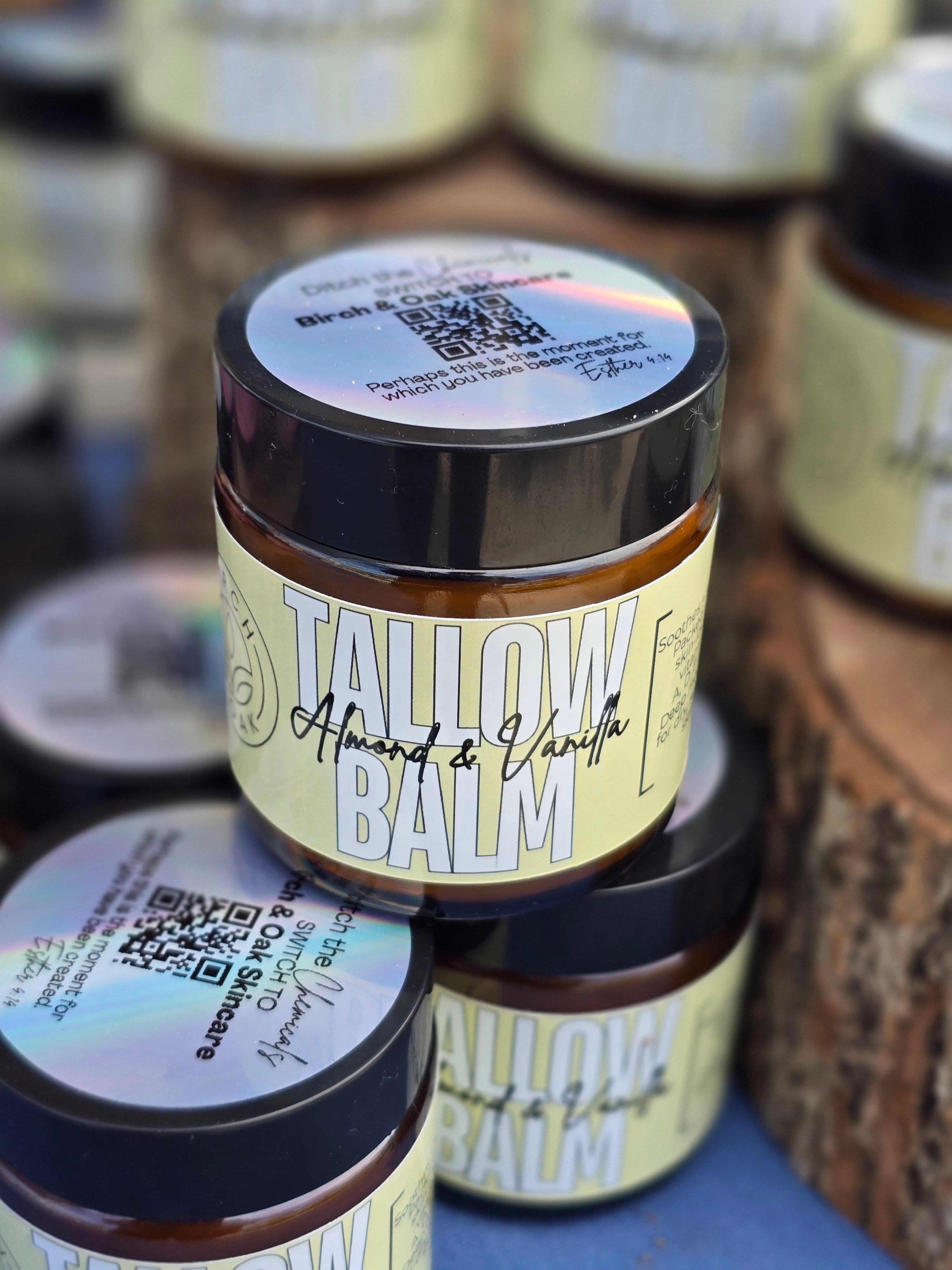
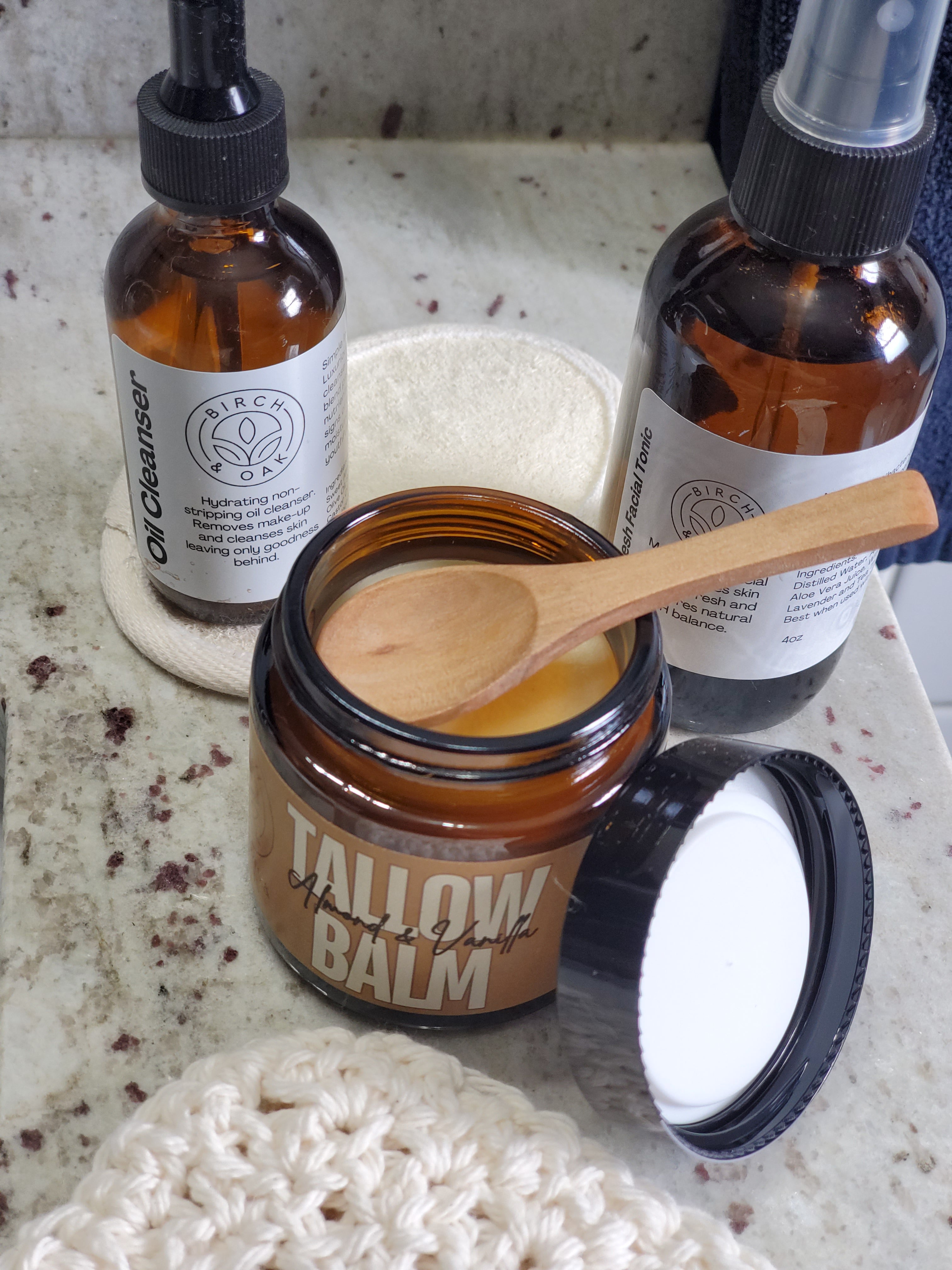
Paired with grass-fed tallow (which has a fatty acid profile remarkably similar to human sebum) and beeswax, you get a salve that's biocompatible, preservative-free, and effective on everything from eczema patches to dry cracked heels to minor burns.
That's the Birch & Oak formulation philosophy in one sentence: start with what actually works, strip out everything else.
Coughs and respiratory support
Plantain leaf tea has been used historically as an expectorant — it thins and loosens mucus and soothes the throat lining. The mucilage coats and calms irritated airways. German Commission E (Germany's equivalent of the FDA for herbal medicines) actually approved plantain leaf for upper respiratory catarrh — that's the official term for congestion and mucus buildup.
A simple tea: one to two fresh or dried leaves steeped in boiling water for ten minutes. Strain, add honey. It's mild and slightly earthy. Not offensive at all.
Gut support
The seeds act similarly to psyllium husk — which makes sense, since Plantago ovata is literally the plant that psyllium comes from. The mucilage in the leaves coats the gut lining and can help with both diarrhea (by slowing motility) and constipation (by softening). If you're paying for Metamucil, sit with that for a second.
How to Prepare It at Home
The spit poultice (right now, no prep needed):
Grab a clean leaf from a pesticide-free area. Chew briefly. Apply directly to the affected area. Hold for 5–10 minutes. This is the most immediate, accessible use of plantain and requires exactly nothing except a plant and a willingness to try something your ancestors have done for 4,000 years.
Leaf tea:
1–2 fresh or dried leaves steeped in boiling water for 10 minutes. Strain well. Add honey. Drink for respiratory issues, gut support, or as a general anti-inflammatory tonic.
Infused oil:
Pack dried plantain leaves into a clean glass jar. Cover completely with olive oil. Option A: seal and leave in a cool dark place for 4–6 weeks, shaking daily. Option B: place in a slow cooker on the lowest setting for 6 hours. Strain through cheesecloth, pressing the plant material to get everything out. Store in a sealed jar away from light. Use topically on skin issues, rashes, and wounds.
Salve:
Take your infused oil and melt it with grass-fed tallow and beeswax using a double boiler method — fill a saucepan with two inches of water, set a glass bowl on top, bring to a gentle simmer. Combine the oil, tallow, and beeswax in the glass bowl and stir gently until everything is melted and clear. Remove from heat, cool slightly, add 20 drops of lavender essential oil if desired, pour into tins. Leave completely undisturbed for about an hour until fully set. What you get is a first aid salve that handles bug bites, burns, rashes, dry skin, and minor wounds — all from ingredients that have been doing this job for longer than pharmaceuticals have existed.
Eating the young leaves:
Spring leaves are the most tender. Strip out the fibrous strings from older leaves (exactly like you would celery). Eat raw in salads, sauté like spinach, or blend into a smoothie. They're high in Vitamins A, C, and K. That last part isn't a wellness blog claim — it's just plant nutrition.
A Few Things Worth Knowing Before You Start
I believe in giving you the full picture, so:
• Harvest only from pesticide-free areas. This means no sprayed lawns, no roadsides that get treated, nothing near a feed lot or a golf course. Know your yard. If you don't know your yard, find out before you start harvesting from it.
• Grass pollen allergies. Plantain pollen is a documented allergen. If you have grass pollen allergies, start any internal use (tea, eating leaves) slowly and pay attention to your body's response.
• Blood thinners. The leaves are high in Vitamin K, which plays a role in clotting. If you're on warfarin or similar medication, be aware of this before making plantain tea a daily habit.
• Seeds and hydration. The seeds swell when wet — similar to psyllium husk. Always drink plenty of water if you're using the seeds internally.
• Yard medicine vs. emergency medicine. Know the line. A bee sting in a non-allergic person is a great plantain moment. An anaphylactic reaction is an EpiPen and a 911 call. A small scrape is yard medicine. A deep wound is a doctor. Use good judgment.
The Bigger Point
Here's what I think about when I teach this stuff:
Every generation that relied on yard medicine wasn't doing it because they were behind. They were doing it because it worked. The information got systematically removed from our everyday lives — not because it stopped working, but because it stopped being profitable for someone else.
Getting it back doesn't require a medical degree. It requires paying attention to what's already growing around you, learning to identify it correctly, understanding what's in it and why, and starting with small, simple applications that carry low risk.
The spit poultice is where almost everyone starts. It's the first time you show your kid that the yard is not just grass and bugs — it's a resource. That moment sticks.
"Your great-grandmother didn't have a co-pay. She had a garden."
Common plantain is as good a starting point as I know. It's everywhere, it's free, it's safe to handle, and the first time it works on a bee sting, you're going to want to know what else is out there.
So we're going to keep going. One plant at a time.
Disclaimer: This post is for educational purposes only and is not medical advice. Always forage responsibly from pesticide-free areas. Consult a healthcare provider before using herbal preparations if you have existing health conditions or take medications. Research sources: Samuelsen, A.B. (2000), J Ethnopharmacol; Adom et al. (2017), Biomed Pharmacother; Cureus (2022); PeaceHealth Herb Library.
Birch & Oak | thebirchandoak.com | More Farms, Less Pharma.